2003 · Exploration · North Atlantic Ocean
The Titanic
A journey to the ocean floor.
- The expedition
- 2003
- Descent recalled by Lowri
- 3 hours
- Deep-water submersible
- Mir 1
A documentary assignment took Lowri inside the Mir 1 submersible and down to Titanic — an encounter with history, exploration and loss.
An extraordinary assignment
In 2003, a television programme Lowri was presenting gave her the opportunity to visit the wreck of RMS Titanic. The ship had sunk in the North Atlantic on 15 April 1912, and its story remained a powerful subject of fascination and tragedy.
The expedition sailed from Canada’s east coast aboard the research vessel RV Akademik Mstislav Keldysh, which supported the deep-water submersibles Mir 1 and Mir 2. On board, Lowri met Dr Anatoly Sagalevich, the designer associated with the Mir programme who also appeared in James Cameron’s Titanic film.
Lowri had spent nearly a year studying the ship, its history and its passengers. Her research was so detailed that she hoped to recognise individual floor tiles when she reached the wreck.
Three hours down
Mir 1 was about 25 feet long, with an interior space of roughly seven feet shared by two passengers and a pilot. The journey was cramped and carried real risk. Lowri remembers feeling nervous, excited and apprehensive as the submersible began its descent.
In her account, she describes descending at around 90 feet per minute for three hours, towards the bottom of the Atlantic. The view would come through a small porthole, only five or eight inches across, supported by a video feed switched on shortly before arrival.
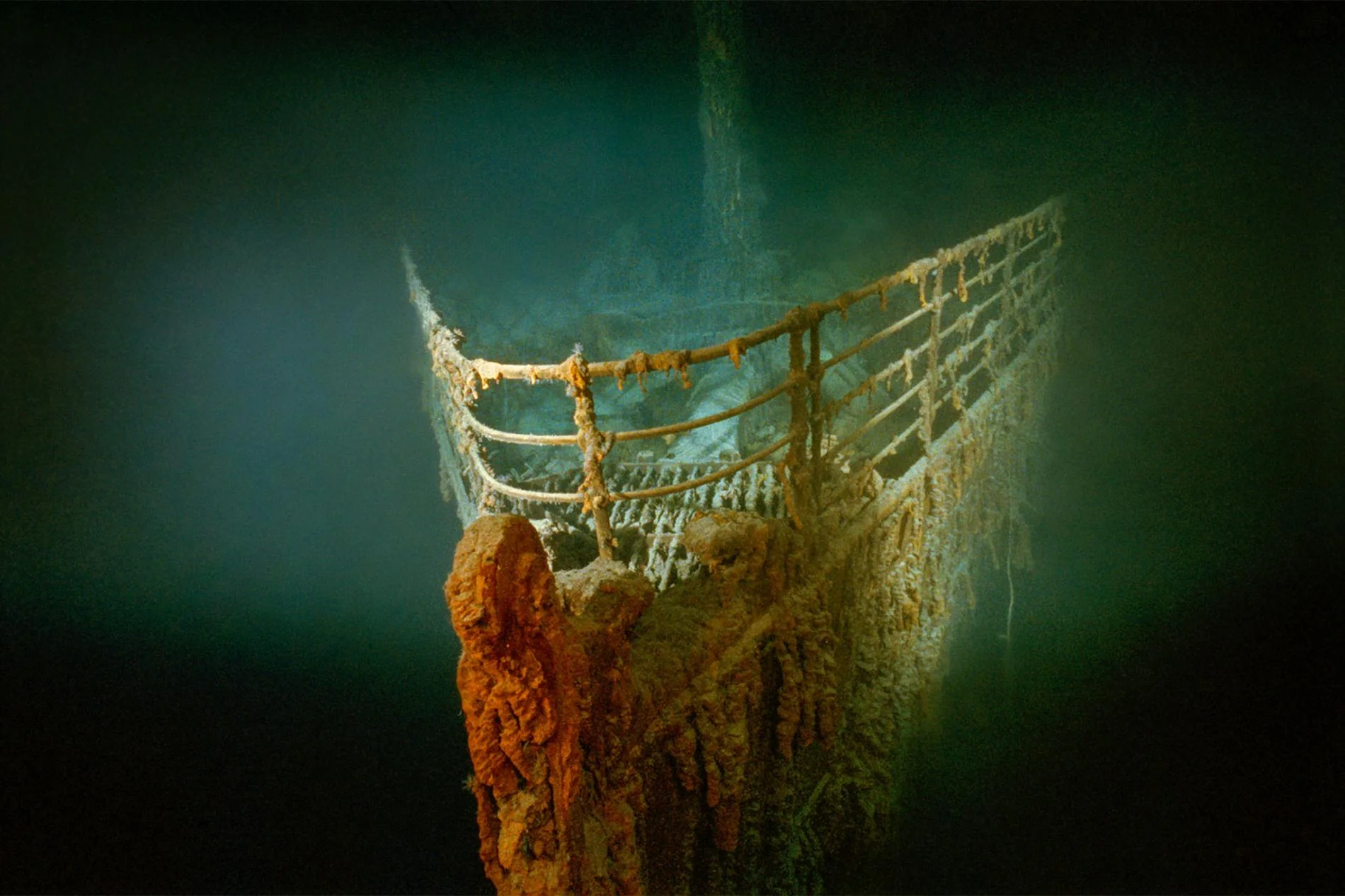
Then the bow appeared. Less than 15 feet away, its shape was immediately familiar, covered in rusticles — rust formations resembling icicles. The scale and proximity made the encounter feel surreal.
Around the wreck
At the starboard side, the wreck rose beyond her field of view. Lowri wanted to watch the screen but could scarcely look away from the window. She recalls passing a row of round portholes, followed higher up by rectangular windows with glass still intact.
The stern was harder to read: a tangled mass of damaged structure, with the port propeller embedded in the sand. Across the debris field lay bottles, third-class soup cups, a washbasin and a cup bearing the White Star name.
Children’s shoes and suitcases were especially affecting. They made the passengers’ interrupted journeys tangible. The wreck was not simply an impressive piece of engineering; it was the resting place of people who had lived their final moments there.
Lowri’s account recalls five hours travelling around the ship and its separated sections. The research she had done beforehand gave meaning to small details, but the personal possessions had the greatest emotional impact.
History at close range
Titanic’s story brought together technological ambition, privilege and human vulnerability. Among those who died were John Jacob Astor IV, Benjamin Guggenheim and Isidor Straus. For Lowri, seeing the remains close up sharpened the contrast between the ship’s celebrated promise and the loss of more than 1,500 lives.
Excitement and awe sat beside grief. There was wonder at seeing such a famous ship, but also a constant awareness that the objects around her belonged to people whose lives had ended there. She later compared the unfamiliar darkness to being on the far side of the moon.
A turning point in storytelling
Lowri returned feeling honoured to have visited Titanic’s resting place. The experience also clarified the kind of television she wanted to make: programmes that joined exploration and adventure with meeting people and telling a meaningful story.
The original account includes visitor-count estimates and a prediction about the wreck’s condition in 2030. Those time-sensitive claims are not repeated here. The lasting story is Lowri’s own experience in 2003 — the preparation, the descent and the emotional weight of what she saw.
From the expedition