2009 · Running · Tapajós National Forest, Brazil
The Amazon
Six stages through the jungle.
- Kilometres
- 222
- Race stages
- 6
- Overall finish
- Top 10
River crossings, dense jungle and overwhelming humidity: Lowri’s first encounter with a race where the environment sets the pace.
A different kind of race
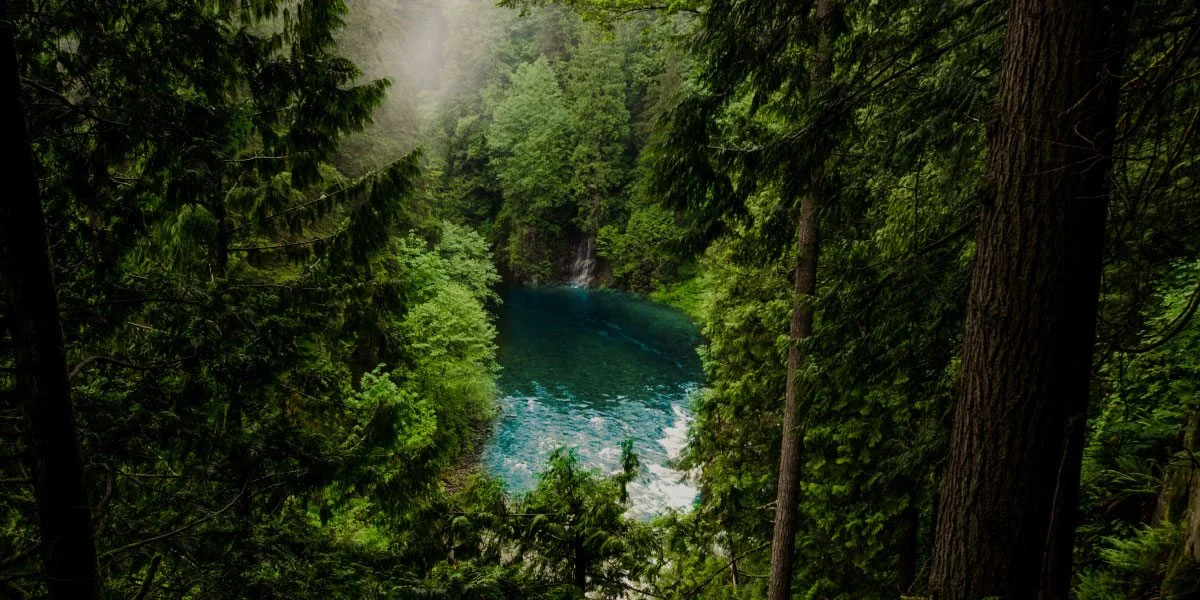
In 2009, Lowri entered the Jungle Marathon in Brazil’s protected Tapajós National Forest. The six-stage race covered 222 kilometres — about 138 miles — over a week, taking runners through swamp, rivers and dense Amazon rainforest.
Temperatures averaged above 40°C, with humidity reported at 99 per cent. Heat exhaustion and dehydration were serious risks, alongside the hazards of wildlife and poisonous plants. Lowri’s original account describes a race with a reputation for a high drop-out rate, where reaching medical care could involve an eight-hour boat journey.
She found herself among elite athletes, Special Forces personnel and world champions. As a television presenter relatively new to this kind of racing, she relied on preparation, persistence and a willingness to keep moving at her own pace.
Finding a rhythm
Lowri arrived a week before the start and worked hard to acclimatise. Other competitors had been unable to do the same and faced an abrupt introduction to the heat. The first stage, at 15.43 kilometres, offered a short opening day.
At the start line, surrounded by seasoned ultra-runners, she briefly sprinted ahead and led for roughly 200 metres. Then she settled into a more sustainable rhythm: running when she felt cool enough and walking when she could feel her core temperature rising.
Jungle paths, a small water crossing, swamp and sharp climbs and descents led to the village of Pini. The important task was not to hold an early position, but to listen carefully enough to her body to continue through the week.
Rivers, climbs and the halfway point
The second stage covered 23.04 kilometres. By stage three, competitors were swimming, running, walking and working their way through rivers, dense jungle and some of the steepest terrain encountered so far. Awareness of what might be in the water or surrounding forest added another layer of pressure.
The route book described stage four, from Pini to Tauri, as an easier day before the long stage. At just under 40 kilometres, it felt anything but easy. Lowri finished the day in fifth place — an encouraging result after a demanding section.
Around the 100-kilometre mark, the race was still not halfway done. Damaged feet, accumulated fatigue and the distance left to cover were persuading other runners to withdraw.
Alone on the long stage
Stage five was 89.4 kilometres, split into two sections. Lowri’s ankles were hurting and she had lost toenails; repeated twisting on unstable ground made each step increasingly uncomfortable. Despite that, she felt strong for the first 30 kilometres and ran with a group of North Face elite runners.
A trip over an obstacle forced her to stop. The group offered to wait, but she encouraged them to continue, expecting to catch up at the next checkpoint. She did not. For hours, she was alone in the deepest, darkest part of the jungle, struggling to remain positive.
Then she stepped on a hornets’ nest and suffered a series of painful stings. She desperately wanted to stop. After about six hours of concentrating on little more than the next step, however, she found a renewed reserve of energy and continued.
The village at the finish
Finishing the long stage left just one more stage to complete. By its end, a deep fatigue had set in, and Lowri counted down the remaining kilometres. She ran along the beach towards the village plaza, where crowds had gathered to welcome the runners.
She had completed the race, reached a remote part of the world that fascinated her and met her original goal. Her account records a top-ten finish overall, second-fastest amateur and third-fastest female.
The original page gives conflicting starting-field totals, so those figures are not used here. What remains clear in Lowri’s account is the severity of the conditions and the sense of achievement at reaching the finish.
The jungle brought a different test every day: snakes, insects, the possibility of jaguars or caiman, and nights sleeping in a hammock. For Lowri, it was unlike anywhere she had run before or since.
From the expedition